Fruits • Nuts • Berries • Perennials

Mission: to plant orchards within the city of Philadelphia, in order to provide healthy food free or at low cost, create jobs, stimulate related business, reduce crime, increase summer cooling, make space for beauty and play.

CONTACT US TO VOLUNTEER
Tell us what you like to do. Join our Listserv!


Philly: The Next Great Orchard

Filadelfia: El Huerto Gran el Próximo

Philadelphia will become the "next great city" by rebuilding itself as an American refuge from expensive oil and gas.

Peak Oil, global warming, de-industrialization, the rise of China and Europe, the declining dollar, population growth and limits to U.S. military power are combining to end cheap fuel, cheap food, cheap homes, cheap consumer goods and cheap land. Everything will soon change.

Most American cities have paved themselves into a corner. To survive, they bring food and fuel from great distances. They are like armies camped far from their sources of supply. All will transform, or fade.

Philadelphia, in the midst of this storm, has an advantage no other American metropolis has-- 40,000 vacant lots and 700 empty factories. Between 1960 and 1990, hundreds of thousands of solid industrial jobs were stolen from Philadelphia workers. When these jobs shipped away to Asia and Latin America, many Philly neighborhoods were destroyed.

Today these huge derelict areas allow us to create a future that works. They are a blank canvas for painting a city that will be stronger, more beautiful, more abundant and fair than any in our hemisphere. Big Money says fill these vacancies with cash machines: condos, casinos and headquarters that pay major taxes. Yet if we did so, Philly would become instead the "next failed city." Smart Money says something different. There are billions of dollars to be made by becomg the first American metropolis to grow most of its own food.

Thousands of acres of urban orchards here will multiply their harvest value, by creating many categories of related jobs and thus reducing the costs of crimefighting, jail building and incarceration.

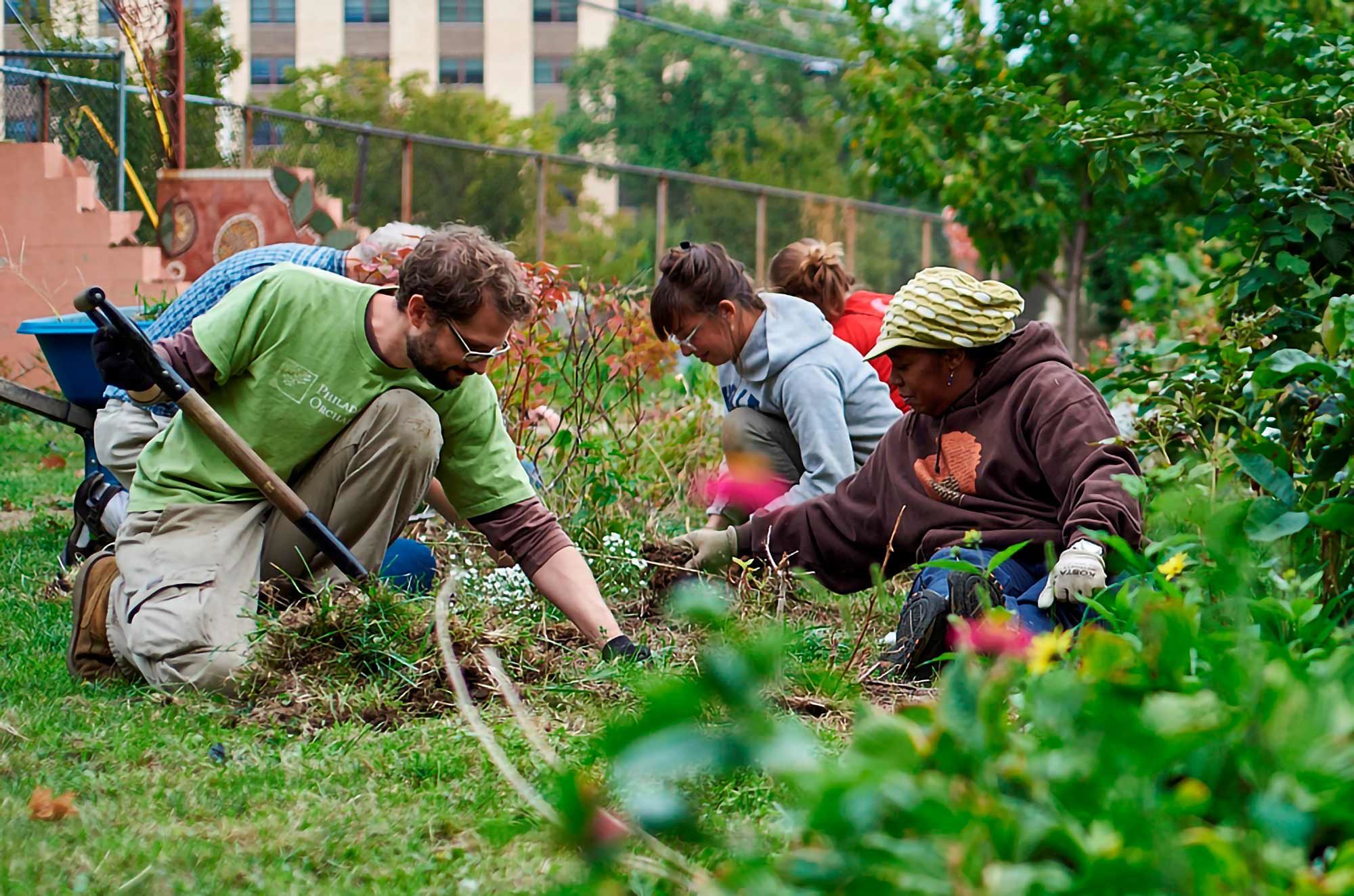
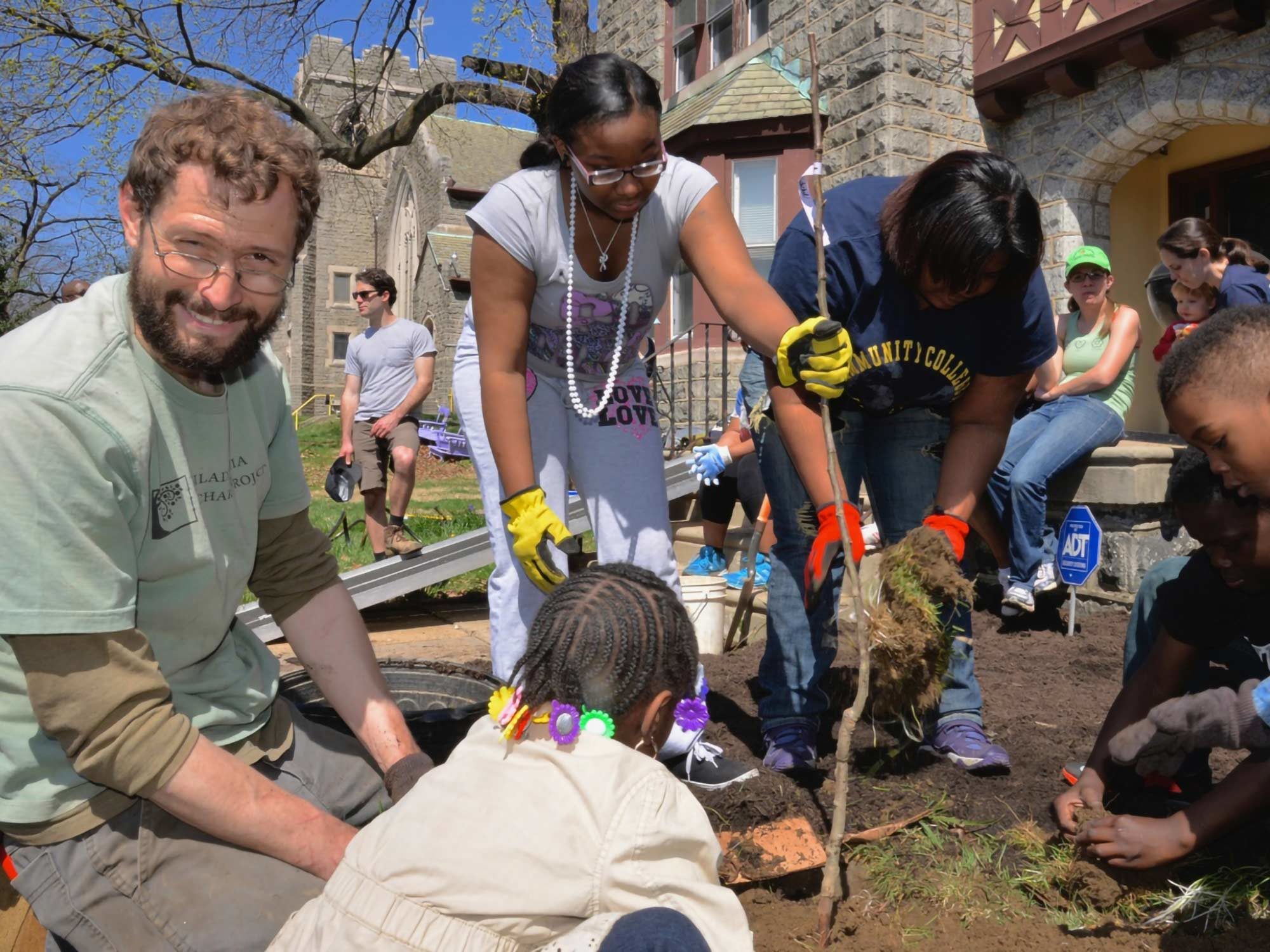
Getting neighbors outdoors working together makes neighborhoods safer. Giving kids valuable farm skills builds career confidence and pride. Happier kids resist drugs. Trees provide cleaner air, better nutrition and better exercise, which means less public cost for healing sickness. Their shade reduces costs to heat and cool homes. Tourists will come here to enjoy the scene, and learn how we did it.

Amid these orchards we can construct clusters of supremely energy-efficient earth-sheltered housing, needing one tenth the fossil fuels to warm and cool them. Ecological colonies (ecolonies) grow food on roofs, recycle rainwater and greywater. These neighborhoods would be linked by light rail and bikepaths. Some streets can be reclaimed for gardens and play. Property values would rise and neighborhood businesses bloom.

All of the above notions are proven practical elsewhere. We need merely to combine them here, setting the nation's pace for greatness. Our challenge is to make these likely by proper zoning and tax incentives, buying and planting land.

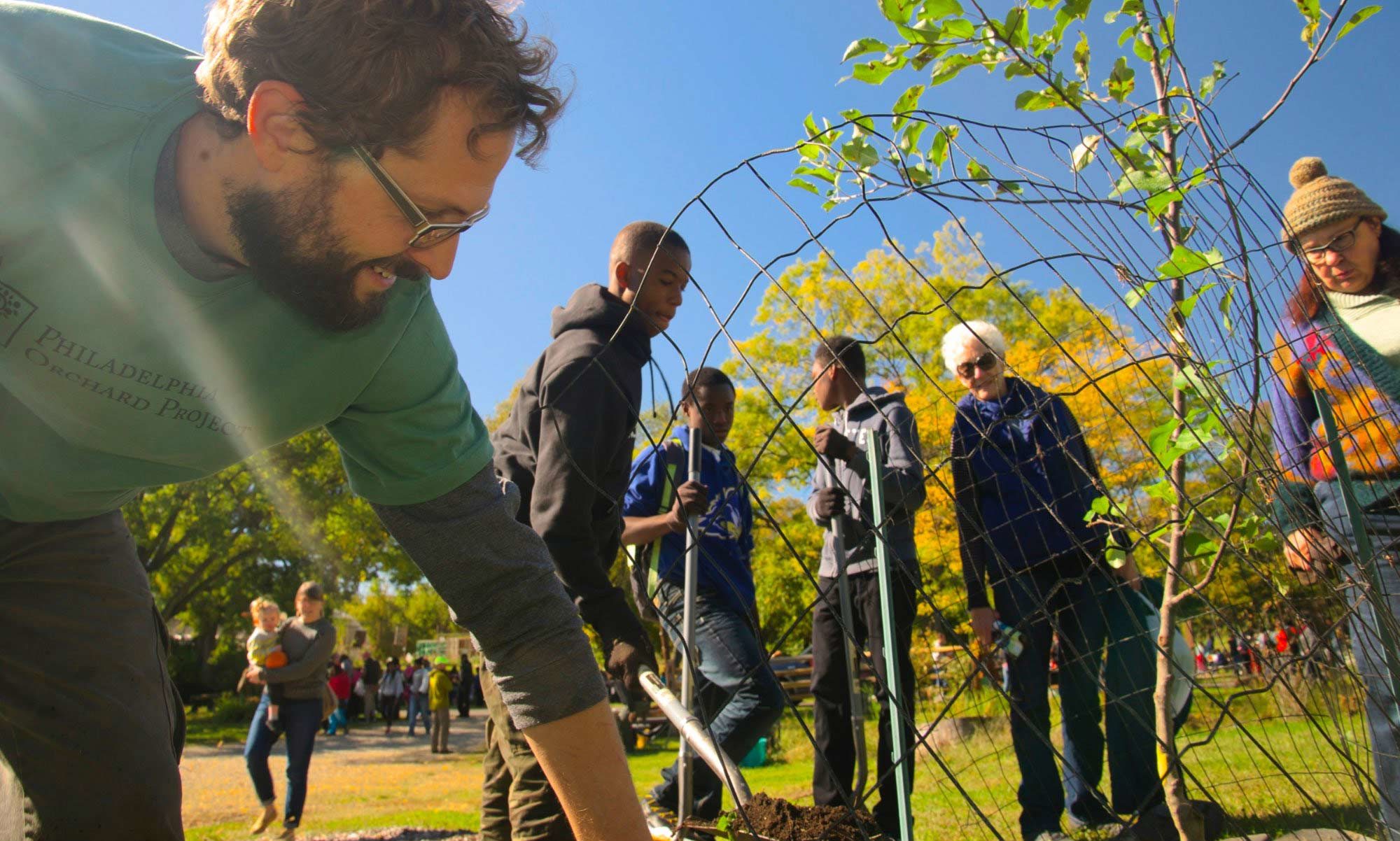
The Philly Orchard Project (POP) organizes the skills and capital to make this happen. You're welcome to join us at our potluck meetings, to donate land or money for land, to connect us to people with orchard skills, and to neighbors willing to help.

Philly Orchard Project
c/o Domenic Vitiello
Department of City & Regional Planning
University of Pennsylvania
210 S. 34th Street
Philadelphia, PA 19104-6311
outreach@phillyorchards.org

Companion Planters in Philadelphia

Fair Food Project
Farm to City
Farmadelphia
Greensgrow Farm
Mill Creek Urban Farm
Neighborhood Gardens Association
Philadelphia Green
Somerton Tanks Farm
Treevitalize
University City Green
Urban Nutrition Initiative
Urban Tree Connection
Weavers Way Farm

DONATE!  

VIA PAYPAL:
(not tax deductible)

VIA CHECK:
Community Health Collaborative
(memo POP)
Department of City & Regional Planning
University of Pennsylvania
210 S. 34th Street
Philadelphia, PA 19104-6311

GUIDE TO DONATIONS:
We seek donations of dollars and land for orchards large and small. Here are suggestions:

Every donation of $25 plants a small fruit tree. $150 plants and maintains one larger fruit tree. Donations of any size are welcome.

Larger donations plant more trees per dollar:

BASIC MEMORIAL GROVE of 20 trees (5 larger + 15 smaller + plaque) cost $2,500

PEACE GROVE 40 trees (10 larger + 30 smaller + bench + plaque) cost $5,000. These could be both memorials to crime victims and assertions of new beginnings. A place for weddings. Playground.

NEIGHBORHOOD RENAISSANCE GROVE 130 trees (30 larger + 100 smaller + simple processing facility + 2 benches + plaque) cost $20,000.

FOOD SECURITY ORCHARD 260 trees (60 larger + 200 smaller + approved kitchen + playground + 5 benches + plaque) cost $60,000. At this scale, we begin to pay a neighbor to organize many volunteers. About an acre.

GLOBAL COOLING ORCHARD 500 trees (100 larger + 400 smaller + approved kitchen + alternate tech-powered meeting area + plaque) cost $150,000. Here we have a 2 acres of dwarf trees with room for some standard nuts.

ECO-VILLAGE ORCHARD 1,000 trees (200 larger + 800 smaller + superinsulated earth-bermed semi-underground affordable limited-equity housing land trust with state-of-art onsite energy generation and efficiencies + equestrian statue of donor/s) $3,500,000. Three acres.

BASIC ORCHARDRY
Grow an Orchard: Earthworks manual
Forest Gardening
Growing Fruit in Philadelphia

Frequently Asked Questions

Why orchards? Why not cash crops?
* Trees declare that agriculture is a permanent part of Philly's economy and culture.
* Trees provide free and low-cost food for low-income neighbors.
* Trees require skill to maintain but are less labor-intensive.
* Trees shade the city, reducing fuel costs.

What about pests (rats, etc.)?
* Vacant lots already breed pests. Fruit/nut orchards clean out debris, clean up soil. Flushed into the open by orchard-building, surviving rats will feed the city's many cats. We can install barn owl boxes.

Will this mean pesticide in my neighborhood?
POP will use non-toxic Integrate Pest Management, fighting bugs with bugs.

Who does the fruit belong to?
Some neighborhoods will invite free harvest, some distribution/sale will be coordinated by neighborhood organizations, some maintained as community-based farms.

How will you protect it from theft?
Gates and low fencing can invite people to enter as helpers rather than thieves. Community gardeners already rely on neighborhood respect and restraint, but free harvest would not be punished. The hungry should eat.

ORGANIZING ORCHARDS AS:

• FOREST GARDEN: tended casually, for free harvest
NEIGHBORHOOD ORCHARD/GARDEN: free harvest donated to low-income residents
EDIBLE PARK: maintained by community group, “tree scouts” and/or City for free harvest.
EDIBLE COMMUNITY CENTER: combined with buildings for related events, festivals, classes, greenhousing.
NONPROFIT NEIGHBORHOOD BUSINESS: sales of harvest to farmer’s markets, restaurants, grocers, caterers.
NONPROFIT URBAN FARM: lot leased from land trust.

New!

Check out THIS MAP of existing edible resources and help us inventory existing orchards, fruit & nut trees, and other edibles in Philadelphia.

SUCCESSFUL PROGRAMS
in Other Cities

Austin Treefolks Urban Orchard Program
Boston Earthworks Urban Orchard Program
Los Angeles TreePeople Fruit Tree Program
Memphis Botanical Garden
Milwaukee Walnut Way Conservation Corps
San Francisco League of Urban Gardeners
Texas Urban Orchard Project
Vancouver BC Edible Parks
Victoria BC Fruit Tree Project
Victoria BC #2 LIfecycles Project
Bradford UK Bowling Park Community Orchard
Scotland Growing Food in Cities
Community Food Projects CFP Grants
MITIGATING URBAN HEAT ISLANDS
via conservation easements
Urban Ohioans Favor Tax for Green Space
GREAT LIST OF URBAN FOREST PROGRAMS
EXTENSIVE BIBLIOGRAPHY